



Disclaimer: This article is not a Legal advice. It is meant to provide information/education
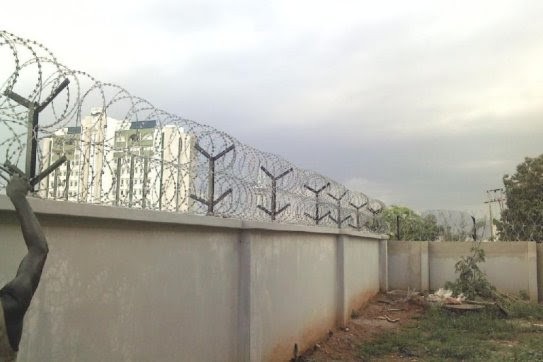
If you walk through many cities in Nigeria from Abia to Enugu, Onitsha to Asaba, Benin to Ogun, Kano to Kaduna, Zaria to Maiduguri, Kebbi to Lafia, and Ibeju-Lekki in Lagos to Ijebu Ode in Ogun State, you’ll see hundreds of empty plots of land surrounded by beautiful block walls. No building. No farming. Just fence and padlock. Ask the owners and they will tell you: “I fenced my land long time ago. It is secure. No problem.”
The question is: “Does fencing alone without anything else on the land constitute legal possession “? Sadly, to the surprise of many land owners, the answer is “No”.
What is Ownership and Possession in Law?
Ownership was defined in Abraham v. Olorunfemi_ (1999) 1 NWLR Pt 163 by Niki Tobi JCA as “the totality or bundles of rights of the owner over and above every other person. “The Supreme Court in _Idundun v. Okumagba_ (1976) 9-10 SC 227 and Dabo v. Abdullahi_ (2005) 2 SC Pt 1 91 stated that ownership of land can be proved by:
- Traditional evidence
- Production of documents duly authenticated and executed
- Acts of ownership extending over a period of time
- Proof of ownership of adjacent land
- Acts of long possession
Possession was defined in Nathaniel Onwuka Ajero & Ors. v. Bernard Ugorji & Ors. _ (1999) 10 NWLR Pt 621 as: “the actual, physical control or occupation of land coupled with the intention to exclude others from it. It is not a mere abstract or technical concept, nor is it constituted by isolated, temporary, or equivocal acts such as merely surveying the boundaries, putting up corner pegs, or erecting a perimeter fence without a positive, continuous, and visible exercise of exclusive control over the land.”
What the Courts Say About Fencing: In Nigerian land law, merely erecting a fence or corner pillars does not automatically translate to legal possession.
1.Makanjuola v. Balogun_ (1989) 3 NWLR Pt 108 192
The plaintiff claimed ownership and pointed to a survey and fence as proof of possession. The defendant argued the land remained vacant and the fence did not stop others. The Supreme Court held that fencing is merely an equivocal act. It shows intention to possess, but it does not on its own constitute actual physical possession sufficient to defeat a better title. True possession requires visible, exclusive, and continuous control such as farming, building, or putting a caretaker on site.
- Okorie v. Philip (2012) 16 NWLR Pt 1327 487
The appellant built a dwarf perimeter fence and gate, then left the land vacant. Years later the respondent cleared the fence and started construction. The appellant sued for trespass. The Supreme Court reaffirmed that fencing without active deployment or supervision does not equal continuous possession. An act of possession must be positive, notorious, and distinct. Leaving an empty fenced lot renders it “vacant land” in equity. A fence cannot protect someone who fails to maintain active presence or lacks a valid root of title.
- Woluchem v. Gudi_ (1981) 5 SC 291
Plaintiffs claimed possession based on concrete pillars and a fence line. Defendants showed they had been farming the interior for generations. The Supreme Court ruled that acts of possession must be open, exclusive, and notorious. surveying, pegging, or erecting a fence do not automatically constitute dispossession against an active occupier. A fence is an artificial boundary, but legal possession requires the immediate capability to exclude the world from using the land.
The principle is clear: A fence is a defensive shield, not a legal title. If two parties contest the same property, a fence built by a speculator will collapse under legal scrutiny when facing an adversary with a superior root of title.
The Supreme Court does not say fencing is worthless. It says fencing, surveying, or pegging are equivocal acts. They can serve as prima facie evidence of possession, but cannot create valid title where none exists, nor override a better lawful title.
This is critical because of competing legal titles. Under Sections 10 and 28 of the Land Use Act, the Governor or Minister of FCT can revoke land and reallocate it.
Section 10: Every Certificate of Occupancy contains deemed conditions. A key one is the development proviso: the occupier must develop or improve the land within a specified time, usually 2-3 years from allocation date.
Section 28(5)(a): The Governor may revoke a Statutory Right of Occupancy for breach of any provision deemed in the C of O. If a speculator buys government-allocated land and leaves it empty and unused, they violate this clause and risk revocation.
This two Supreme Court cases explain this:
- Foreign Finance Corporation v. Lagos State Government & Ors_ (2016) 14 NWLR Pt 1532:Here a prime plot was allocated and a C of O granted. FFC. The titleholder failed to comply with statutory obligations and implied covenants under Section 10. Government revoked the right of occupancy under Section 28(5)(a). The titleholder sued, alleging breach of constitutional right to property.
The Supreme Court ruled against the titleholder and affirmed the revocation. It stated that a C of O is not an absolute shield. Where the holder violates conditions deemed in the C of O by Section 10, the Governor/Minister of FCT has full authority under Section 28(5)(a) to revoke.
- In O. Adole v. Boniface B. Gwar_ (2008) 11 NWLR Pt 1099 562
Adole claimed title by C of O. Gwar counter-claimed as a deemed grantee with prior possession. The C of O was challenged for irregularity. The Supreme Court dismissed Adole’s appeal and held the C of O issued to him was invalid. It upheld Gwar’s status as deemed grantee. The Court reiterated that while a Governor cannot act arbitrarily, where there is a distinct breach of terms under Section 10, Section 28(5)(a) applies. It also confirmed: any C of O issued irregularly cannot override existing lawful rights. The Land Use Act protects deemed grantees.
The issue here is that owners of land in Nigeria must know that there can be competing interests with or without title, and possession becomes a factor. Fencing alone does not suffice.
To protect your land:
- Do more than fence. Show continuous, open, and exclusive use. Build, farm, or post a caretaker.
- Comply with Section 10 development conditions in your C of O to avoid revocation under Section 28(5)(a). Do not fence alone .
- Ensure your title documents are valid. An irregular C of O will not defeat a deemed grantee with possession.
A fence marks intention. The law demands action which is more than fencing.
Follow PROPERTYGROM on our social media for more updates on fencing, possession, and situations that can lead to revocation and reallocation of land by the State/Minister of FCT.